Student Services
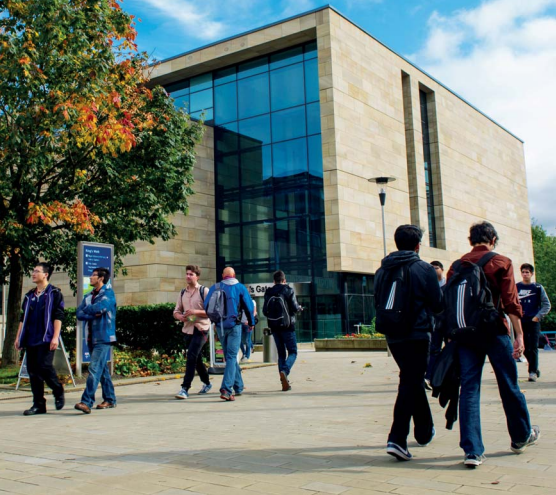
The majority of Student Services referred to in this section can be found in King’s Gate, a dedicated Student Services building in the heart of the campus. The main Student Services entrance is Level 2 opposite the Students’ Union Building. There is also an entrance on Level 1 from Barras Bridge.
Your first point of contact for the majority of Student Service enquiries is the Interaction Team (iTeam). They will be able to answer many of your questions directly and will signpost you to colleagues within specialist teams if needed. Further information including opening times can be found at www.ncl.ac.uk/studentservices
Some examples of how the iTeam can help are;
- Appointments with specialist teams (pre-booked and drop-in)
- Change of circumstances such as:
- Leave of absences
- Withdrawal from studies
- Student registration (outside September’s main Welcome and Registration period)
- Issuing new and replacement smartcards
- Advice on self-service portal and document production
Some of the specialist teams located in King’s Gate:
- Accommodation (University owned and managed as well as private sector) – page 12
- Careers – page 45
- Financial Support – page 47
- Student Wellbeing – page 48
- Visa Support – page 50
As well as Student Services, King’s Gate, there are other services situated on Campus.
- Academic Support – page 41
- Library Services
- Maths Aid
- Writing Development Centre
- Language Resource Centre
- English Language Support
- Chaplaincy – page 50
- Sport Centre – further details on page 51
- Newcastle University IT Service – further details on page 53
- Student Union – further details on page 54
Academic Support
Library Services
The University Library Service provides access to a wide range of resources, services and study spaces as well as professional expertise to help you to be successful in your studies and research.
The Philip Robinson Library is open 24 hours a day during term-time and the Marjorie Robinson Library Rooms, Walton and Law libraries are open until late. The libraries offer over 1 million books, subscribe to over 26,000 journals and provide access to more than 6 million ebooks. Library Search (libsearch.ncl.ac.uk) can be used to locate books, journal articles and a lot more information using a single search. Online subject guides have been published to bring together all the key resources for your subject together with a variety of guides on topics such as referencing. These are available at: http://libguides.ncl.ac.uk/
Library Staff are available at information points and service desks to help you to find the information you need. They also offer workshops and one to one consultancies to help you improve your information skills. Alternatively you can use our online Library Help service 24/7 (http://libhelp.ncl.ac.uk/) to access support no matter where you are.
Our libraries have a range of study and research spaces including group and individual study rooms. They collectively house over 775 computers. Wifi is also available so you can use your own devices.
The Philip Robinson Library also houses the Special Collections (www.ncl.ac.uk/library/specialcollections) which are made up of rare and historic books, manuscripts, maps and illustrations.
If you have any questions or need any help ask a member of Library staff – we are here to support you through your course. For further information on Library services see www.ncl.ac.uk/library
Maths Aid
Maths Aid is a drop-in service offering help with mathematics and statistics problems to undergraduate and taught postgraduate students who are not in the School of Maths, Statistics and Physics. For more information please visit us at www.ncl.ac.uk/ask/numeracy-maths-statistics/
Language Resource Centre
Located in the beautiful Old Library Building, the award-winning Language Resource Centre offers a wide selection of self-study language-learning materials in over 100 languages. Membership is free to Newcastle University students and staff.
University members have full access to language-learning resources including grammar and language study books, audio-visual materials and interactive language-learning software. Students can also access IPTV online, a world TV & film video streaming service with over 3000 titles available in a wide range of languages and subjects.
Students can download uTalk, a language-learning app with over 130 languages online. Free to download with a current Newcastle University student or staff login, uTalk helps language learners develop their foreign language skills with fun, interactive memory exercises.
Free language conversation groups are available each semester at beginner, intermediate and advanced levels. This free resource is an excellent opportunity for students to further their speaking skills & confidence.
Additional language support is also available including one-to-one language advisory sessions and UWLP language surgeries. Support sessions are free and offer students the chance to focus their study goals and receive further language-learning guidance.
Full IT access is available in the centre with PCs, tablets, printers and photocopiers. Students can also book private study spaces for independent or group study.
To register for Language Resource Centre membership or to find out more, please visit the Language Resource Centre website: www.ncl.ac.uk/language-resource-centre/
Writing Development Centre
Location: Level 2, Robinson Library
Website: http://www.ncl.ac.uk/students/wdc/
E-mail: wdc@newcastle.ac.uk
Twitter: @NCL_WDC
The Writing Development Centre’s role is to help you become a confident and successful independent learner. Our team of tutors offers advice and guidance in academic skills including:
- Understanding assignment questions and marking criteria
- Critical thinking, critiquing and reviewing literature
- Planning and structuring writing (incl. paragraphing)
- Academic writing style (incl fundamentals of grammar)
- Avoiding plagiarism
- Managing time, work and writing (incl. writers block and procrastination)
- Exams and Revision (excluding takehome exam papers, except in general terms)
- Presentations and posters
We work closely with colleagues in other services such as the Library, Student Wellbeing and INTO who can also help you to develop your academic skills.
Our approach is developmental – we don’t ‘check’, proofread or correct work for you, but we do help you identify and develop effective strategies which will suit your subject and your own study preferences, and help upgrade your academic performance. We work with students at all levels from Undergraduate to Postgraduate and across all subjects. We can only offer advice on work submitted for assessment as part of a degree programme at Newcastle University.
We offer one to one tutorials based in the Writing Development Centre which focus in depth on a specific issue you want to work on. Tutorials with us are centred around your individual academic development and are non-judgmental, supportive and strictly confidential. Appointments should be made online via our website. We also run a range of other activities throughout the academic year on core academic skills topics, and are invited by Schools and Faculties to run subject-specific sessions as part of degree courses. We also maintain a range of online resources on academic skills and writing.
To make an appointment, book a workshop or find out about our opening hours, please see our website http://www.ncl.ac.uk/students/wdc/
Academic Skills Kit (ASK)
The Academic Skills Kit is an online resource which brings together the range of academic skills development provision across Newcastle University into a one-stop website with all you need for study success. The site offers information on the various services which provide academic skills development from information literacy, revision strategies and academic writing to time management and maths and statistics as well as specialist support, for example, for international students or those with Specific Learning Difficulties. It also hosts a range of self-access online resources with advice and tips on various aspects of study.
To find out more please see our website: www.ncl.ac.uk/ask
English Language Support
On arrival at Newcastle University, non-native speakers of English are required to take the University English Language Assessment (UELA). The purpose of this assessment is to advise new students on whether they would benefit from attending In-Sessional English Support classes. These classes aim to help non-native speakers of English to express their subject knowledge accurately and clearly, therefore helping them to achieve their potential on their chosen Degree Programme. Each week, up to 12.5 hours of free support is available. This consists of Writing Workshops, Listening & Speaking Lessons, Interactive Lectures and one-to-one Writing Tutorials. Further information is available at www.ncl.ac.uk/students/insessional. Alternatively the In-Sessional team can be contacted at insessional@ncl.ac.uk for any specific questions.
Careers and Work
Newcastle University’s award-winning Careers Service can help you make the most of your unique skills and experiences. Whether you plan on embarking on a graduate career, going on to further research or starting your own business, we offer a range of support to help you realise your potential while you are studying and for up to three years after you graduate. www.ncl.ac.uk/careers
Advice
Our Information Officers and Careers Advisers are here to offer one-to-one advice, guidance and the information you need to explore your existing plans or generate new ideas. No appointment is required.
Information
There’s lots of information and useful resources on our website and in the Careers Service which will give you an idea of the opportunities out there. Our team of advisers can help you make the most of this information.
Developing potential business ideas
If you have a business idea and want to take it further, then visit the Careers Service for a chat with one of our business start-up advisers. You can also make use of the Start-up Space – our creative thinking space where you’ll find other students and graduates working on their business ideas. Lots of activities take place across both semesters to help you develop a business idea and take it to the next level, including startup workshops and monthly networking events. We can help you to connect with influential business advisers and investors across the Region and take your business idea to the next level. www.ncl.ac.uk/careers/riseup
Skills and experience to add to your degree
Develop your skills and gain practical experience by taking part in extracurricular activities or undertaking work experience. Look out for the ncl+ logo around campus– it highlights a range of activities that will all add to your degree. You can gain recognition for your extracurricular activities through the Pride of Newcastle University Awards or by taking part in the ncl+ Award. www.ncl.ac.uk/nclplus
You’ll find paid work experience opportunities and internships on our website and staff can help you find more specific roles. www.ncl.ac.uk/careers/develop/workExperience
Graduate with the skills employers are looking for
The Career Development Module gives you the opportunity to gain credit towards your degree by completing one of our work-related modules – you can help out in a local school, the community or the University, or use your part-time job to build up a bank of skills that employers are looking for. www.ncl.ac.uk/careers/develop/cdm
We also offer NCL2100: Exploring Enterprise, Entrepreneurship and Employability, a module which will enhance your employability by developing your personal enterprise and entrepreneurial skills, through working creatively on solutions to reallife challenges. http://www.ncl.ac.uk/careers/modules/enterprise/
Meeting employers
Networking with employers may sound scary, but it can give you a head start when it comes to landing a job or developing your business idea. The Careers Service can help you make contacts, e.g.
- through ‘Graduate Connections’, an online database of over 600 graduates now employed in a wide range of jobs and professions. You can read their profiles or contact them directly for information, advice and insight about the work they do and how to follow in their footsteps: www.ncl.ac.uk/careers/jobs/makingcontacts/graduateConnections.php
- by talking directly to employers at events we organise, which range from large-scale recruitment fairs to smaller workshops and sector specific insights. Networking events run throughout the year. For dates, times and details see our website: www.ncl.ac.uk/careers/events
Part-time and temporary jobs
We advertise part-time, temporary and vacation jobs that can fit around your studies. As well as earning some extra cash, you’ll also gain a valuable addition to your CV. For more information, visit our website and register with our online jobs database, Vacancies Online. We also run JobsOC, an on-campus recruitment agency offering casual jobs across the University.
Graduate vacancies
Regional, national and international based employers regularly host presentations and attend recruitment fairs on campus. This is your chance to meet them face-to-face and find out more about their placement opportunities and graduate jobs. Check our website for the latest events and graduate vacancies www.ncl.ac.uk/careers/vacsonline
Making applications
We run workshops throughout the year which cover all aspects of applying for jobs, from writing your CV to participating in assessment centres. You can also get personal advice and feedback on your CV, job and further study application forms, covering letters, interviews and business-related applications, on any weekday without an appointment.
Financial Help
The Student Financial Support Team is part of the Student Wellbeing Service and administers various funding schemes to assist students as well as providing information, advice and guidance about student finance related matters. More information is available at: www.ncl.ac.uk/students/wellbeing/finance
Student Finance Advisers
Advice, information and guidance are available about a range of student finance related issues such as sources of funding, money management and budgeting. More information is available at: www.ncl.ac.uk/students/wellbeing/finance/advice
The advisers offer one-to-one appointments: www.ncl.ac.uk/students/wellbeing/finance/appointments.htm as well as running weekly drop-in sessions: www.ncl.ac.uk/students/wellbeing/finance/dropin.htm
Financial Hardship
Student Financial Support Fund (UK only) Registered UK students who are experiencing unexpected financial difficulties or who have a low income may be eligible to apply to the Student Financial Support Fund. This funding is made available by the University on a discretionary basis to assist students who are struggling to cover their living costs. All applicants must have accessed all other sources of funding available to them before applying for assistance. Successful applicants may receive either a non-repayable award or a repayable loan depending upon circumstances. An application form can be obtained from the Student Services Helpdesk located on level 2 of King’s Gate, our website or the Student Advice Centre. More detailed information about the fund can be found at: www.ncl.ac.uk/students/wellbeing/finance/funding/ukstudents/hardship/
Financial Assistance Fund (non-UK EU and International students only)
Registered international and non-UK EU students who are experiencing unexpected financial difficulties may be eligible to apply to the Financial Assistance Fund (FAF). FAF is made available by the University on a discretionary basis to assist students who are struggling to cover their basic living costs. Applicants must be able to demonstrate that they started their course with adequate funding in place to cover all of their costs (including family and dependants) for the duration of the course. FAF cannot be used to replace significant shortfalls in funding or to assist with the payment of tuition fees. Successful applicants may receive either a non-repayable award or a repayable loan depending upon circumstances. An application form can be obtained from the Student Services Helpdesk located on level 2 of King’s Gate, our website or the Student Advice Centre. More information is available at: www.ncl.ac.uk/students/wellbeing/finance/funding/nonukstudents/hardship/
Emergency Loans
Short-term, interest free, emergency loans are available on a discretionary basis to assist students experiencing delays in their funding or suffering immediate financial crises. Usually only a small sum will be loaned to cover very basic costs. More information is available at: www.ncl.ac.uk/students/wellbeing/finance/funding/ukstudents/emergencyloan.htm
Student Wellbeing Service
Starting university for the first time, moving to a different city or country and meeting new people can be a daunting prospect, no matter what type of student you are. The Student Wellbeing Service is here to provide information, advice, guidance and support for a wide range of student issues. This support has been designed to enable you to maximise your potential and have the best experience you can whilst at University. This service is without charge and available to all students. Further information is available at: www.ncl.ac.uk/students/wellbeing
Counselling
We provide a confidential, safe place in which to explore emotional difficulties which may be having a negative impact on your day-to-day functioning and getting in the way of your academic experience and studies. During a short assessment appointment, we will discuss the range of support we offer and which option might best suit your particular needs; this could include signposting to self-help resources or to specialist services, attending one of our groups or having individual sessions with a therapist.
Talking to a therapist can help with a variety of problems from the past or present (e.g. loss, depression, eating distress, anxiety and relationship difficulties). Therapists do not give advice but the therapeutic process can enable an increased understanding of yourself and the choices you have. We provide time-focused counselling, offering up to six individual sessions.
You can request an assessment appointment by phoning 0191 208 3333, by completing an enquiry form at my.ncl.ac.uk/students/contact or in person at the helpdesk on level 2 of King’s Gate.
If you have a long-term mental health condition, supported by medical evidence, you may also have access to reasonable adjustments and support to help you engage in your studies, see Disability Support below.
Disability Support
If you have a disability or a long-term medical or mental health condition we would encourage you to contact the Student Wellbeing Service as soon as possible to discuss your support requirements. You can do this by completing and returning the form on page 70 of this booklet. It is very helpful to let the appropriate staff know of any circumstances which may affect your studies and life at University.
Specific Learning Difficulties
If you have a specific learning difficulty, such as dyslexia or dyspraxia, an Autism Spectrum Disorder/Asperger’s syndrome or AD(H)D, you should contact the Specialist Learning Team as soon as possible and provide us with a copy of your documentation which contains information about your diagnosis. If you do not have a current report we can help you to arrange an assessment. We can also discuss any support that you may require e.g. additional time in examinations and study skills and mentoring support.
Disabled Students’ Allowances (DSA)
Funding is available from the Disabled Students’ Allowances for UK disabled students who, because of their disability, incur extra costs. You can apply for Disabled Students’ Allowances through Student Finance England (or the equivalent body if you live in Scotland, Wales or Northern Ireland).
Advice on Disabled Students’ Allowances is available from our Student Wellbeing Service Advisers. Further details are available at: www.gov.uk/disabled-students-allowances-dsas
The Hardware Loans Scheme
The Hardware Loans Scheme aims to provide assistive equipment to visitors, staff and students with a disability or health condition. Equipment includes high visibility screens, large key keyboards, portable hearing loops, and back supports. Some equipment is restricted and you may require a referral from a Disability Adviser. Further information is available at: http://www.ncl.ac.uk/itservice/hardware-loans
Visa Support
The Visa Team offers free and impartial information and advice for students from outside the EEA on a range of immigration enquiries. The team provides assistance with Tier 4, PBS dependent visa renewals, issues relating to student visa categories, Schengen visas, police registration and work during and after your studies.
New students can meet the Visa Team at the special immigration induction sessions during International Welcome Week and throughout September. Students with visa questions throughout the year are welcome to use the Visa Team’s drop-in service in Student Services, King’s Gate. If you need to renew your Tier 4 visa you can attend one of the regular visa workshops to find out what you need to do next.
Chaplaincy
The Chaplaincy Team is part of the Student Wellbeing Service and is formed of Chaplains who represent their various faith communities and traditions. Chaplains are committed to supporting tolerance, diversity and respect, welcoming people of all faiths and those with no religious faith. They offer confidential support to all students and staff, aiming to help them discover appropriate spiritual responses to life concerns, as well as aiding their personal growth while at Newcastle. They seek to foster individual care, good relations, commitment and worship.
Your university years can be a period of great change in your life. Faith and spirituality may form an important part of these changes. Whether you are looking to explore your understanding of spirituality, or to deepen your commitment to your particular faith, or to use the wisdom of religion to help you grow as a person, the Chaplains are happy and able to help you.
Contact details: ncl.ac.uk/students/chaplaincy/chaplains/
Our events and activities: ncl.ac.uk/students/chaplaincy
Local places of worship: ncl.ac.uk/students/chaplaincy/places
Sport and Physical Wellbeing
Newcastle University has a reputation as one of the top universities for sport in the country. The Centre for Physical Recreation and Sport and the Athletic Union (AU) provide excellent facilities and an extensive programme of competitive and recreational sporting activities for students of all abilities, whether you wish to take up a sport for the first time or are participating for fun, fitness or serious competition.
Sports Clubs
All students at the University are eligible to become members of the Athletic
Union and are able to join any of its 60+ student run sports clubs. These range from traditional sports such as hockey, rugby and football, to more adventurous activities such as mountain biking, parachuting and sub-aqua. If we do not have a sport for you, you have the opportunity to set up your own club. www.nusu.co.uk/getinvolved/sports
Performance Sport and Sports Scholarships
University representative teams compete under the banner of ‘Team Newcastle’ in the British Universities & Colleges Sport (BUCS) programme where we excel in basketball, fencing, football, lacrosse, rowing, rugby union, squash and water polo. Our student clubs also compete in regional and local leagues. For high performing athletes we offer a significant number of sports scholarships and a range of professional support aimed at ensuring that our athletes fulfil both their academic and sporting potential.
www.ncl.ac/nclsport/performance
www.ncl.ac/nclsport/performance/scholarships
Health & Fitness and Recreational Activities
Want to keep fit, have fun and try new sports? We run over 1,500 exercise classes / year with highly qualified tutors who provide a range of classes. These include; high energy classes to improve fitness; mind and body classes to reduce stress and Dance classes to improve co-ordination and flexibility. The ‘Give it a Go’ programme, run by NUSU, is a no experience required sports taster programme of up to 20 sports / term where no previous experience and no commitment are required to take part.
www.ncl.ac.uk/nclsport/campus/exercise
www.nusu.co.uk/getinvolved/giveitago
Inclusive Newcastle provides a wide range of sporting services to remove the barriers you may face to participate in sport and physical activity. If you need a bit of extra support, assistance or reassurance to get involved talk to us – we will listen and work to get you involved.
www.nusu.co.uk/getinvolved/sports/inclusive
Semi Competitive Sport
If you want to play sport in a fun but competitive environment, there are lots of opportunities at Newcastle to join a team and play in regular fixtures with your friends. Intra Mural Sport welcomes over 3,200 students of all sporting abilities to take part in a programme of annual league and cup fixtures in a range of sports including; football (11,7 and 5 a-side), rugby union (15,10 and 7 a-side), netball, basketball, futsal, mixed hockey and indoor cricket.
www.ncl.ac.uk/nclsport/campus/intra-mural
Sports Facilities
Indoor sports are catered for at the University Sports Centre which houses a 125-station health and fitness suite, a strength & conditioning room, a dance studio, a main sports hall and two multifunctional rooms. Outdoor sports facilities are available at Cochrane Park, Heaton and Longbenton providing facilities for archery, cricket, football, lacrosse, netball, rifle shooting, rugby (union and league), tennis and ultimate frisbee. At Longbenton, the main venue for all our major team sports, there are two floodlit all-weather pitches providing facilities for hockey and football. Newburn Water Sports Centre hosts our Canoe and Boat clubs with the river Tyne providing the ideal training resource for these sports.
Track and field facilities are available at Gateshead International Stadium while ice hockey takes place at Whitley Bay Ice Rink. Swimming and other watersports, such as canoe polo, water polo and sub-aqua take place in pools throughout the city. Other outdoor activities, such as sailing, walking, mountaineering and climbing are all well catered for in the nearby countryside and along the North East coast. For full details on sport at Newcastle University visit:-
www.ncl.ac.uk/nclsport/
www.nusu.co.uk/au
Newcastle University IT Services
From getting connected to WiFi and finding a PC on campus to accessing course resources online, NUIT looks after the University IT services which help to support your learning, teaching, and research. Further information is available at www.ncl.ac.uk/itservice
Get Started with IT
Every student receives a username and password which give you access to the main campus IT Services, including WiFi. Your username and password are usually sent in an email before you arrive at University, so remember to keep the details safe and bring them with you. You’ll also have a personal Newcastle University email account which is used for all official University emails. Details on how to access your account or get your email on your mobile are available at www.ncl.ac.uk/itservice/email
You’re given file storage space known as your Home Folder or Documents; it’s a secure place to keep your coursework. You can access your files from any campus PC, or from your own device at filr.ncl.ac.uk (there’s also a free ‘Novell Filr’ app). You can also access files and some University software through your web browser at ras.ncl.ac.uk
Using Your Own Computer
WiFi is widely available across campus; simply select the newcastle-university network and enter your University username and password to connect. Most Halls have WiFi or Internet points; details on how to connect are available at www.ncl.ac.uk/itservice/connect. We run a free mobile and laptop connection clinic to help you get online, which also offers general IT advice; visit the Old Library cluster, Monday to Friday between 09:00 – 16:00.
Computer Cluster Rooms
There are computer cluster rooms across campus with 3000+ networked PCs, a number are open 24 hours a day, 7 days a week. All feature a wide range of software and some have extra specialist software, like CAD programs. For information see www.ncl.ac.uk/itservice/clusters
Printing and Photocopying
All cluster rooms have black and white A4 printers; larger rooms also have colour and A3 printers. Photocopying is available in the University Libraries. You can print to cluster room printers straight from your own laptop, tablet or mobile at nuprint.ncl.ac.uk. All students are given a free allocation of print and copy credit at the start of each academic year. You can buy more credits online at printing.ncl.ac.uk or buy a cash voucher from the Philip Robinson Library main counter.
University Mobile Apps
Download the ‘Newcastle University’ app from your app store to view your timetable, find the nearest available PCs, check your print credit, access library services and check out the latest news and events. You’ll also find links to other useful apps to help with your studies.
IT Support
You can log and track requests for help and support online at nuservice.ncl.ac.uk or contact the IT Service Desk on + 44 (0) 191 208 5999. Staffed IT support can be found in the Old Library, Philip Robinson Library and Marjorie Robinson Library Rooms. For information and opening hours see www.ncl.ac.uk/itservice/support
It’s important to be aware of the rules of use for the University’s IT facilities; learn more at www.ncl.ac.uk/itservice/rules
Students’ Union
Newcastle University Students’ Union (NUSU) is known by all of our students as the place where you really can Live, Work, and Play. We’re the social side, the welfare side and overall general fun side of your time at University. NUSU has a range of services and opportunities aimed at making your student experience the best it possibly can be. There are so many ways in which you can get involved including: our extensive sports clubs and societies; Course and School/Institute representation; activities through Give It A Go, campaigns, student led conferences and the CampusSports programmes; The Courier student newspaper, lots of gigs and club nights in the SU Bar and Venue; and a variety of volunteering opportunities in the community and local schools, to allow you to develop the practical skills employers are looking for.
Further information is available on the website www.nusu.co.uk
Your Student Representatives
NUSU is led by six Sabbatical Officers and supported by nine Part Time Officers (PTOs). Officers lead on a range of issues and campaigns and represent every sector of the student community at the highest levels in the University. All students are eligible to run and be elected for roles each year; it’s a great way to make a change at higher levels and fully represent the student body.
NUSU also coordinate and train all the course and school representatives who are here to ensure your studies at Newcastle are fully supported and your ideas and feedback is taken into account.
You can see a list of your current representatives and access more information at www.nusu.co.uk/representation
Your Opportunities
At NUSU we really want to encourage our students to get involved with as many activities and as many opportunities as possible. Our aim is to have a positive impact on your experience and the communities in which you live. And that’s why we offer so much to our students be it club nights, campaigns, events, fundraising and even providing employment opportunities.
You can get involved in so many ways including: our Athletic Union (AU) which offers a whole range of sporting opportunities and supports over 60 different sports clubs; over 200 different societies from Baking to Comedy; Volunteering in community and charitable projects, The Courier Newspaper, Newcastle Student Radio (NSR) and Newcastle University TV (NUTV) which offer opportunities to develop skills in media and writing. We even have bursaries available to some eligible students to help you get involved with our clubs and societies.
Our opportunities don’t end there either. We need volunteers to help run our epic Freshers’ Week, Raising and Giving (RAG) Week, become Course and Hall Reps and sit on our Students’ Union Council. To find out more about how you can get involved with NUSU head to www.nusu.co.uk or pop in to speak to one of our Sabbatical Officers.
Membership of Newcastle University’s Students’ Union (NUSU) is free. Under the terms of the Education Act 1994 you have the right to opt out of membership of the Students’ Union if you so wish. Students who wish to opt out should notify the General Office in writing. Non-members of the Students’ Union retain the right to make use of all of the Union’s facilities and services but are not permitted to vote in elections or at student meetings or to stand for election as a Student Union Officer; they may not become office-bearers in student societies or Athletic Union clubs. Please see the Students’ Union Code of Practice for further details www.ncl.ac.uk/students/progress/assets/documents/USCodeofPractice.pdf and the Code of Practice issued by the University relating to freedom of speech http://www.ncl.ac.uk/media/wwwnclacuk/conferences/files/codeof-practice-for-freedom-of-speech.pdf
Student Advice Centre (SAC)
At some point during your studies, you may need or want to seek independent advice or assistance. The Student Advice Centre is a free, confidential and professional service of the Students’ Union. Our friendly staff can offer specialist advice, representation and assistance on a range of issues, including finance, housing, academic, consumer and personal matters, as well as many others. The SAC also work with other specialist services, such as the Police for safety advice and drop in sessions and free massage clinic. The SAC’s service is independent of the University, and strictly confidential and you can contact us at https://www.nusu.co.uk/support/sac/
Nightline is a confidential, non-judgmental telephone service for students who need some information, advice or just a chat. It runs from 8.00pm to 8.00am on 0191 261 2905.
The number is printed on back of each student Smartcard.
Your Health, Safety and Security
Security related incidents involving University students are extremely infrequent and even those might sometimes be avoided through exercise of greater care and personal vigilance. Steps are outlined on the University Security web page: www.ncl.ac.uk/estates/services/security/personalsafety
It is important as a student that all crime related incidents occurring on campus are reported to University Security Staff who are on duty 24/7. Only in this way can we respond and maintain your personal safety and the security of personal property. Security staff can be contacted on + 44 (0)191 208 6817 or email security.control@ncl.ac.uk
University Liaison Police Officer
We are fortunate to have a dedicated Northumbria Police Officer who is based on Campus during most business hours and is here to look after the welfare & safety of Students, Staff and the Campus infrastructure. PC 2538 Mo Khan is there to help you with all manner of issues and problems. He has two drop in sessions each week, on a Tuesday in the Student Advice Centre in the Student’s Union Building and on a Thursday at Student Services in King’s Gate. Both sessions are 12 – 2pm; come along and say hello. Mo can also be contacted via the Security Control Centre on ext. 6817, or send an email to mo.khan@ncl.ac.uk or by telephoning the Northumbria Police switchboard on 101.
Medical and Emergency Information
Be aware of your own health and safety and the wellbeing of your friends and fellow students. If you suspect flu, a hangover or even meningitis – please ‘look out for your friend’. Getting medical help early can save a life.
Remember the following emergency numbers and put them into your mobile phone:
- Universal Emergency Number for Fire, Police and Ambulance – 999 (can be dialed free from a call box or mobile)
- University Security Team – + 44 (0) 191 208 6817
- Northumbria Police – 101 (for non-emergencies or general information)
It is essential that you register with a local NHS doctor. During the Arrival, Welcome and Registration period you can do this at our ‘Register with a Doctor’ event in the Hadrian Building. Alternatively there are many NHS doctor practices in Newcastle and further information is available from the NHS at: www.nhs.uk/Service-Search
NHS Walk-In Centres
Walk-in centres in Newcastle offer non-appointment access to treatment of minor illnesses, injuries and ailments. The service sees residents of Newcastle and North Tyneside and also patients who are not registered with a GP, or who are in the area temporarily. There are a number of walk-in centres across the region and details of local walk-in centres is available at: www.newcastlehospitals.org.uk/services/accidentemergency.aspx
Accident and Emergency Departments
Accident and emergency departments are for urgent life threatening illnesses. The closest Accident and Emergency Department to the University can be found in the Royal Victoria Infirmary. Further information is available at http://www.newcastle-hospitals.org.uk/services/NHCH_walk-in-centres.aspx
There are also A&E departments in North Tyneside General Hospital and South Tyneside General Hospital and other hospitals in the region.
NHS Dentist
We advise you to register with a dental practice. There are many NHS dental practices in Newcastle and further information is available from the NHS at: www.nhs.uk/Service-Search
For dental emergencies, visit the Newcastle Dental Hospital on Richardson Road (behind the Royal Victoria Infirmary). The emergency clinic opens at 9am, Mondays to Fridays (except bank holidays). The main reception opens at 8am to receive patients; patients will be seen on a first come, first served basis. Contact the Dental Hospital by telephone: + 44 (0) 191 282 4664 or visit their website: www.newcastle-hospitals.org.uk/hospitals/dental-hospital.aspx
Immunisation
Please note that in accordance with recommendations by the Department of Heath all new students are strongly advised to check their vaccination status before arrival at University, normally done through your doctor. Students should all be up-to-date with vaccination against tetanus, polio, diphtheria and especially meningitis ACWY (see below), as well as measles, mumps and rubella (MMR). Two doses of measles, mumps and rubella vaccine (MMR) provide the best protection against these diseases which are currently circulating in the UK.
Immunisation Against Meningitis (Meningococcal ACWY)
Public Health advice is that students of any age, going into higher education for the first time should seek immunisation against Meningococcal disease (meningitis) before starting University. This group is at a slightly higher risk than the rest of the population, possibly because of being away from home for the first time and because of the level of mixing and contact taking place.
You are advised to contact your doctor as soon as possible to arrange to be vaccinated, bearing in mind that it takes two weeks for the vaccine to become effective. This includes home and international students and also any members of their families up to the age of 25 who will be accompanying them if they have not previously received the vaccine. Any international student whose doctor refuses to vaccinate on the grounds that meningitis is not a problem in their country should stress that meningitis does occur in England and that vaccination is very important.
If it is not possible before you arrive, it is recommended that you seek immunisation as soon as you start the new term.
Smoke-free Campus
Newcastle University operates a no smoking policy which covers all buildings and open spaces on campus. For further information please see: www.ncl.ac.uk/students/progress/Regulations/SPS/nosmoking.htm
Alcohol
An active social life is an important part of the student experience and for many this may involve drinking alcohol. Newcastle University encourages all students to think carefully about alcohol consumption to ensure that you are not damaging your health or risking your personal safety.
For further details about the University’s policies on alcohol together with the advice and support that is available to students in this area please see: www.ncl.ac.uk/students/progress/student-resources/community/alcoholawareness.htm
Emergency Taxis
The Newcastle University Students’ Union and Student Wellbeing Service have collaborated to provide Newcastle University students with an emergency taxi service. If you are stranded with no money to get home but have your student card with you, you can use the service by calling 0191 298 5050 and quoting reference NEW02. You can pick up wallet sized reference cards from Student Services, King’s Gate. Further information is available at: www.ncl.ac.uk/students/wellbeing/about/EmergencyTaxiScheme.htm
If Things Go Wrong
Most students encounter few, if any, problems during their period of study at the University but sometimes things can go wrong. There are processes in place to help you – see the sections below. You are urged to seek advice as soon as a problem occurs. You should speak to your Tutor in the first instance.
Personal Extenuating Circumstances (PEC)
The most important thing you can do is to tell your School/Institute about the problems you are having that affect your studies and/or assessments. You do this initially by talking to your Personal Tutor. The Personal and Extenuating Circumstances (PEC) form, which is available online via the S3P portal is a way informing your School/Institute about any significant and unavoidable problems you may be experiencing and requesting a number of different types of adjustments – such as extensions, exemptions, deferrals, board of examiner discretion.
The online PEC form with relevant evidence should be submitted to your School/Institute Office via the S3P portal as soon as possible so that the appropriate adjustment or referral to other services can be considered. The PEC Procedure and submission guidance are available at http://www.ncl.ac.uk/students/progress/studentresources/help/
Student Complaints & Resolution Procedure
The Student Charter sets out the standards of service you can expect to receive from the University. If you are dissatisfied with the service received from a member of staff or from a
University School/Institute or Service, you should follow Level 1 of the Student Complaints & Resolution Procedure www.ncl.ac.uk/students/progress/Regulations/SPS/complaints.htm to raise the issue locally for consideration.
You can view the full Student Charter at www.ncl.ac.uk/pre-arrival/regulations/#studentcharter or pick up a hardcopy from Student Services, King’s Gate. If you remain dissatisfied following a Level 1 investigation, you should proceed to Level 2 of the Student Complaints & Resolution Procedure by completing the formal complaint form and submitting this with a detailed statement and any supporting evidence to casework@ncl.ac.uk. You should not use this procedure to complain about the behaviour of another student. Allegations of student misconduct should be sent to casework@ncl.ac.uk where they may be investigated under the Student Disciplinary Procedures www.ncl.ac.uk/students/progress/Regulations/SPS/disciplinary.htm
Academic Appeals & Queries Procedure
You can request a review of Board of Examiners decisions (degree classification, final module results, stage or other progression decisions etc), decisions about Personal Extenuating Circumstances (PEC), Unsatisfactory Progress sanctions, Degree Programme Director’s Decisions via a DPD Request Form (requests for exemptions, interruption of studies, etc) and Attendance Monitoring termination of studies by using the Academic Appeals & Queries Procedure. The full procedure, academic appeal form and supplementary guidance for students is available at www.ncl.ac.uk/students/progress/Regulations/SPS/appeals.htm. You should follow Level 1 of the procedure in the first instance by submitting your query to your School/ Institute for response. If you believe you still have a case for appeal following this review, you should complete the academic appeals form and submit this with your statement and supporting evidence to casework@ncl.ac.uk
Good Academic Conduct
At Newcastle University we value high standards of academic conduct from our staff and students. Conduct is an important part of maintaining and developing our reputation. Good academic conduct reflects the values which underpin academic life, such as honesty, integrity, a shared community of ideas and respect for others’ work.
Attendance
As part of your commitment to your studies you are (except for absence with good cause) expected to attend all elements of your programme of study, including lectures, seminars, tutorials, practicals, laboratory work, language classes, performances, fieldwork and examinations. Research shows that students who attend their classes tend to be more successful in their studies.
You may be withdrawn from your programme if you do not demonstrate satisfactory attendance and progress. It is therefore important that you keep your School/Institute informed of any absence. The University’s policy on attendance is available at: www.ncl.ac.uk/students/progress/Regulations/SPS/Attendance/
It is particularly important that all international students attend their classes or notify their School/Institute of any absence. The University’s Attendance Monitoring Policy requires that all international students maintain an overall attendance of 80% to ensure they meet the requirements of their visa. The University must report to the Home Office any international students who do not meet the minimum attendance level. If you are absent from classes this could lead to the termination of your visa. Schools/Institutes may keep class lists or registers or ask students to confirm their attendance in other ways. Please also refer to the Programme Handbook for the approach in your subject area, and make sure you understand the attendance policy in your School/Institute.
Tier 4 students
If you are an international student and currently hold a Tier 4 visa, you need to be aware that you must comply with certain requirements for immigration purposes. This includes the following:
- Ensure that your Tier 4 visa is valid for Newcastle University. Your visa should show the Newcastle sponsor licence number CKTK52NU0;
- Ensure that you register for your programme of study on time;
- Maintain your registration on a full-time programme at all times;
- Attend your programme in full, ensuring that you comply with the attendance monitoring requirement for your programme;
- Inform your school or supervisor by following the student’s notification of absence procedure if you are unable to attend your classes;
- Register with the police, if required; and
- Ensure that you do not exceed the permitted number of working hours per week during term-time (for Tier 4 students: 20 hours per week for students studying at degree level or above/10 hours per week for students studying below degree level). Students working on a thesis or dissertation remain under the 20 hour per week restriction.
- Tier 4 students must not be self-employed.
As a Tier 4 student, you must ensure that you seek visa advice from the Visa Team if you intend to change your programme of study.
For further details, please visit: www.ncl.ac.uk/students/progress/visa/
Examinations
Please note that it is YOUR responsibility to make yourself available for examinations at ALL times during ALL THREE examination periods. You must therefore take note of the examination dates and especially when making arrangements for vacation, employment and any overseas travel as the University cannot accept individual requests with regards to the timing of examinations. All University examinations are held in Newcastle, although some international students may be able to arrange off campus resit examinations in British Council offices within their home country. Examination dates for this year are on the back of this booklet.
For further information about examinations including how to enter, timetables, venues and what to take, please visit: www.ncl.ac.uk/students/progress/exams/exams/
Examination Rules
In relation to University examinations, candidates are expected to follow the Exam Rules and Guidance. Candidates who fail to follow the rules will be subject to the University’s Assessment Irregularity Procedures which can result in the issuing of academic penalties.
To view the rules in full, please visit: www.ncl.ac.uk/students/progress/exams/exams/examrules
In particular, you should note that:
- Mobile phones, mobile devices and smart watches must be fully switched off (not just set to ‘silent’ mode) and placed in the area for personal belongings. They are not permitted to be in your possession during an exam even if they are switched off.
The following also represent some (not all) of the actions that would represent a breach of the rules:
- Writing notes/formulae on the exam paper or exam stationery before the examination has been started
- Viewing the exam questions prior to the start of the exam
- Communicating with other candidates whilst in an exam venue
- Refusing to comply with the instructions of the invigilators
- Removing or introducing any exam stationery from/into an exam venue
- Being in possession of any materials/ devices that are not specifically authorised for the exam
You are strongly advised to spend a few minutes reading the Exam Rules and Guidance prior to any examinations to help ensure that you are fully aware of what is expected and required of you in the exam venues.
Calculators
Please note that ONLY the following 3 models of calculator are permitted in examinations:
- Casio FX-83GTPLUS
- Casio FX-85GTPLUS
- Casio FX-115MS
- (Plus any discontinued versions of the same models of calculators. For clarity, this means any calculator model that begins with ‘Casio FX-83’, ‘Casio FX- 85’ or ‘Casio FX-115. ’
It is your responsibility to ensure that you have a permitted model of calculator (if required for examinations). These are readily available to purchase from many different outlets including the Student Union Shop on campus.
Assessment Irregularities
The University will assess your work and at the end of your studies award you a degree on the basis of your achievements. It is only fair to other students that this work is your own and properly acknowledges the work of others. Everyone’s marks and awards are threatened by poor academic conduct.
We will investigate any reported assessment irregularities under the Assessment Irregularities Procedure www.ncl.ac.uk/students/progress/Regulations/SPS/assessment.htm. The most common assessment irregularities are Plagiarism and Collusion, defined below together with other examples of academic misconduct.
Further information about Good Academic Conduct is available at www.ncl.ac.uk/right-cite/conduct/
Plagiarism
Plagiarism is defined as the use of others’ work without correct acknowledgement. Good academic work is expected to draw on other sources but these must be acknowledged appropriately using the correct referencing conventions. This enables others to see where the ideas you use have come from, which actually lends added authority to your work. It also allows readers to follow up these sources directly. It involves being honest about what is your work and what is the work of others. Students who plagiarise are gaining an unfair advantage over their honest colleagues.
Collusion
Collusion is defined as the submission by two or more students of the same or similar pieces of work, which are presented as the individuals’ own solely authored work. Apart from formal group work, any work you submit is expected to be entirely your own. Submitting work that is not entirely your own is considered to be dishonest. It is also dishonest to help another student gain credit for work that is not their own. Copying without the author’s permission is not deemed to be collusion, however, taking another student’s work without permission is theft and constitutes academic misconduct.
Proof Reading
As the work you submit should be your own work, there are limits to the extent to which you should use a proof reader. A proof reader may point out typographical, spelling or grammatical errors but cannot correct them.
Auto (Self) Plagiarism
This applies when work (or similar) has already been submitted for an assessment at Newcastle or elsewhere. This may be considered to be an attempt to gain double credit for the same piece of work and is unfair and dishonest. This should not apply to draft copies of research work; if you are unsure, please speak to a member of staff for clarity before submitting your work.
Procuring or Attempting to Procure Assessed Work Created by Another Person
Students are expected to produce their own work and therefore any submission of work by another person constitutes improper means. An attempt to procure such work shall be treated as an attempt to use improper means and may be considered as dishonesty.
Disciplinary Procedures
The Student Disciplinary Procedures seeks to ensure that student disciplinary matters are dealt with fairly and promptly at the appropriate level by those with clear authority from the University. Students who are found to be involved in an act of misconduct will be sanctioned in accordance with University rules and regulations; this can include a mandatory fine, written warnings, suspensions and expulsions. The Student Disciplinary Procedures provide full information including examples of misconduct and associated fines.
www.ncl.ac.uk/students/progress/Regulations/SPS/disciplinary.htm
Withdrawing from University
If you have doubts about continuing with your studies you are advised to discuss the matter with your personal tutor or supervisor as soon as possible. The University Careers Service can also provide information and support during this decision making process. If you receive funding for your studies (e.g. from Student Loans Company) we recommend you seek advice from our Student Financial Support Team regarding the financial impact of your decision. If you have paid tuition fees you should contact Student Services to find out whether any refund is due or how much you may owe to the University. Further information is available on page 24 of this booklet.
If you decide to withdraw, you should inform your personal tutor and the Interaction Team, Student Services, who will process your withdrawal and notify (as appropriate) other internal colleagues and the Student Loans Company. You are also required to complete a withdrawal questionnaire at http://www.ncl.ac.uk/students/progress/student-resources/change/ Students on Tier 4 visas should be aware that withdrawing from their studies will impact their immigration status in the UK.